By Mario GonzalezTechnique
The Fake Shot in Padel: How to Disguise Your Intentions and Wrong-Foot Opponents
Learn the fake shot in padel: how to disguise your intentions, hold the net pair still, and wrong-foot your opponents with deception instead of raw power.
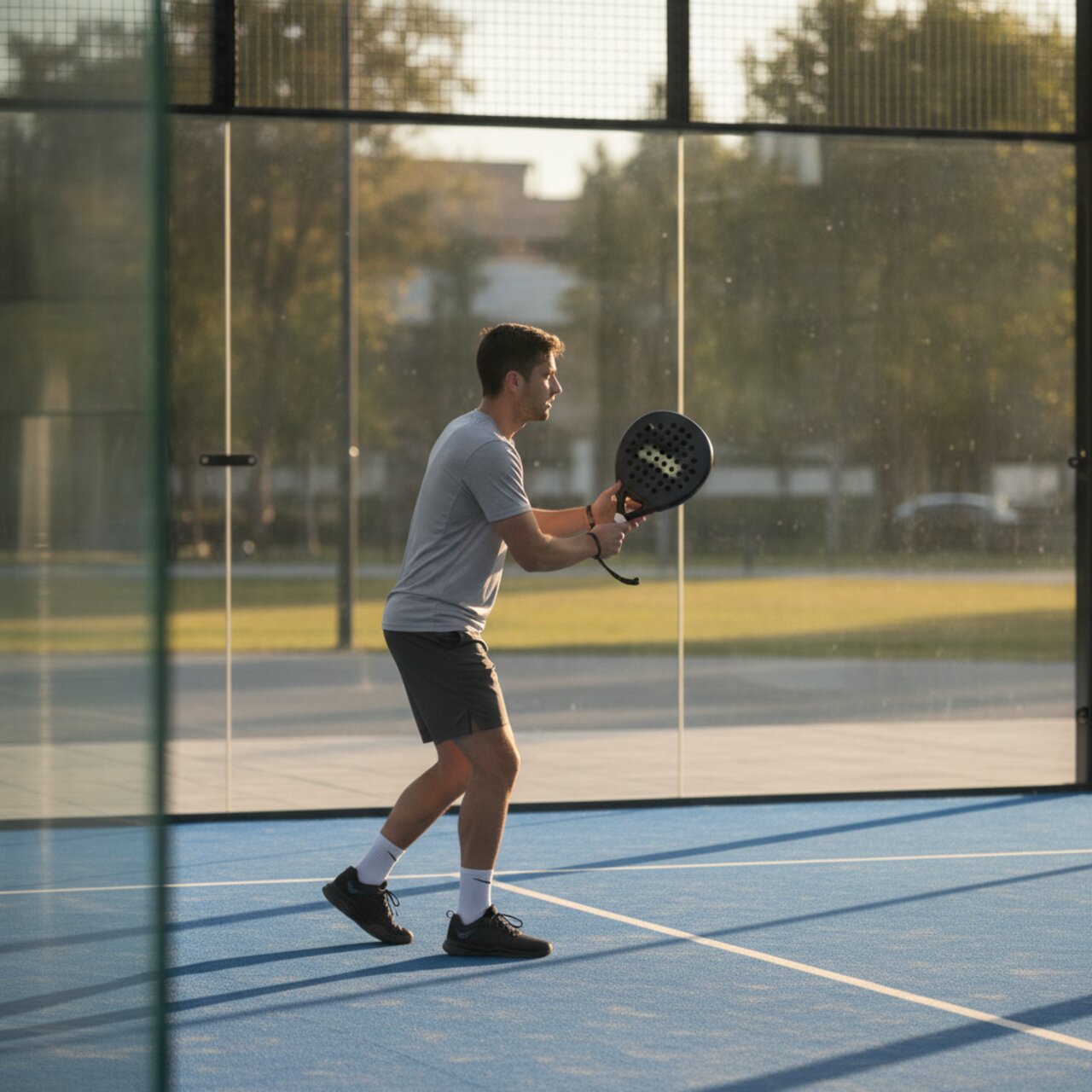
The fake shot in padel is what separates players who hit the ball from players who play the opponent. A fake, or a disguise, is any preparation that tells your opponents one thing while your paddle does another. You set up as if you are lobbing and you drive. You show a cross-court angle and you go down the line. Done well, deception freezes the pair in front of you for the fraction of a second it takes to win the point, and it does it without you swinging any harder.
Most amateurs telegraph everything. Their shoulders, their eyes, and their paddle all announce the shot a full second before contact, so even a mediocre opposing pair reads it and gets there. The fake shot is the fix. It is less about a special stroke and more about controlling the information you leak before you hit, and this guide breaks down exactly how to do that.
Why Deception Beats Power
A padel court is small. The net team can cover almost any single ball if they know where it is going, which is why brute pace so rarely produces clean winners against decent opponents. What they cannot cover is a ball they committed to the wrong side for. Half a step in the wrong direction turns a comfortable volley into a lunge or a miss.
Deception attacks reaction time rather than court coverage. If an opponent leans left because your body said “cross-court” and the ball goes right, you have effectively made the court twice as wide without hitting the ball any faster. This is the same logic behind smart shot selection covered in when to attack versus when to defend: the goal is to win the point on your terms, not to overpower a pair that is already balanced and set.
There is a second benefit. A player who has been wrong-footed once starts to wait. They stop anticipating and start reacting, which slows their whole game and makes your genuine shots more effective too. The threat of the fake is worth almost as much as the fake itself.
When to Use the Fake Shot
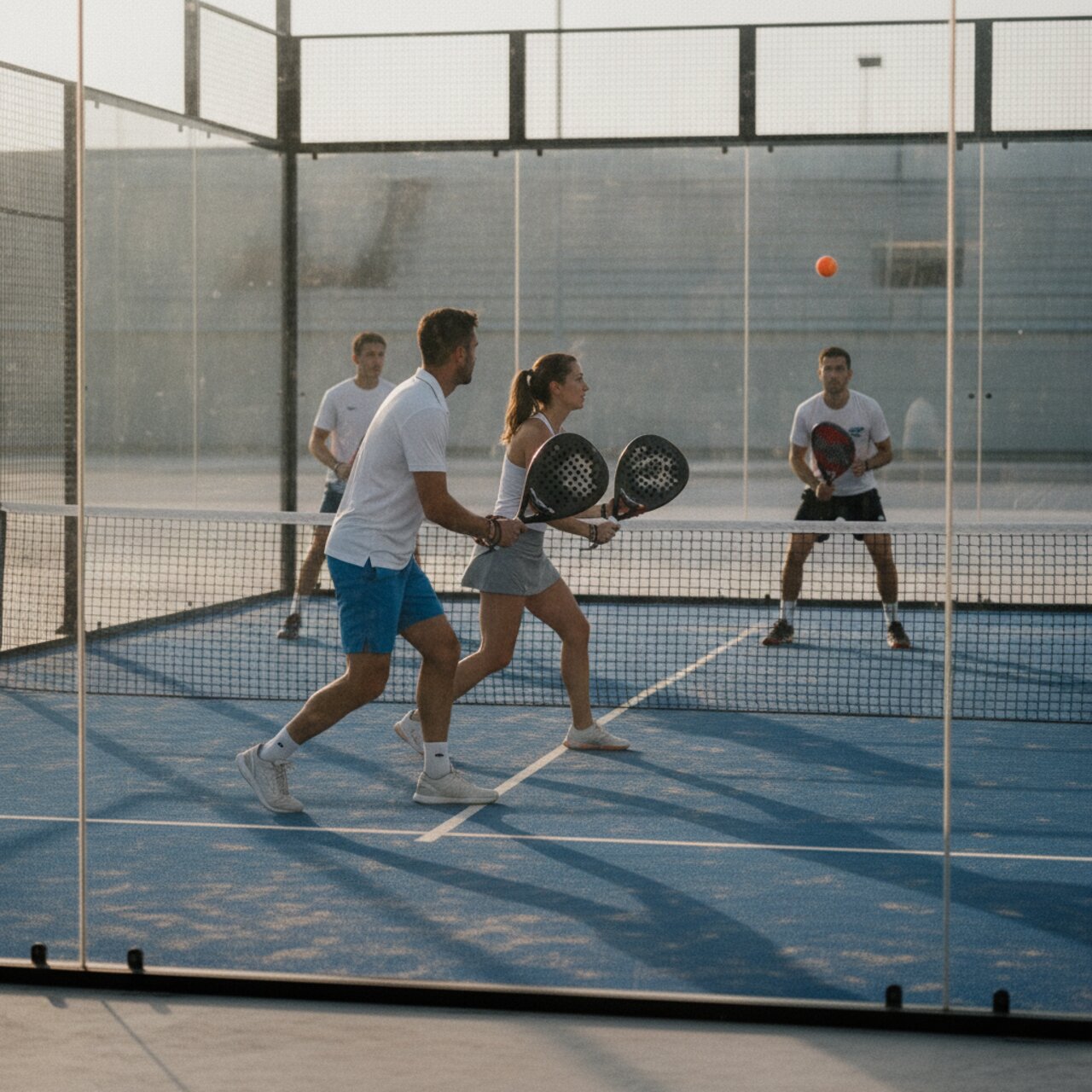
The fake works best when your opponents have time and are actively reading you. That means net players who are set, balanced, and watching your paddle, usually when you are attacking from a comfortable position and they are defending.
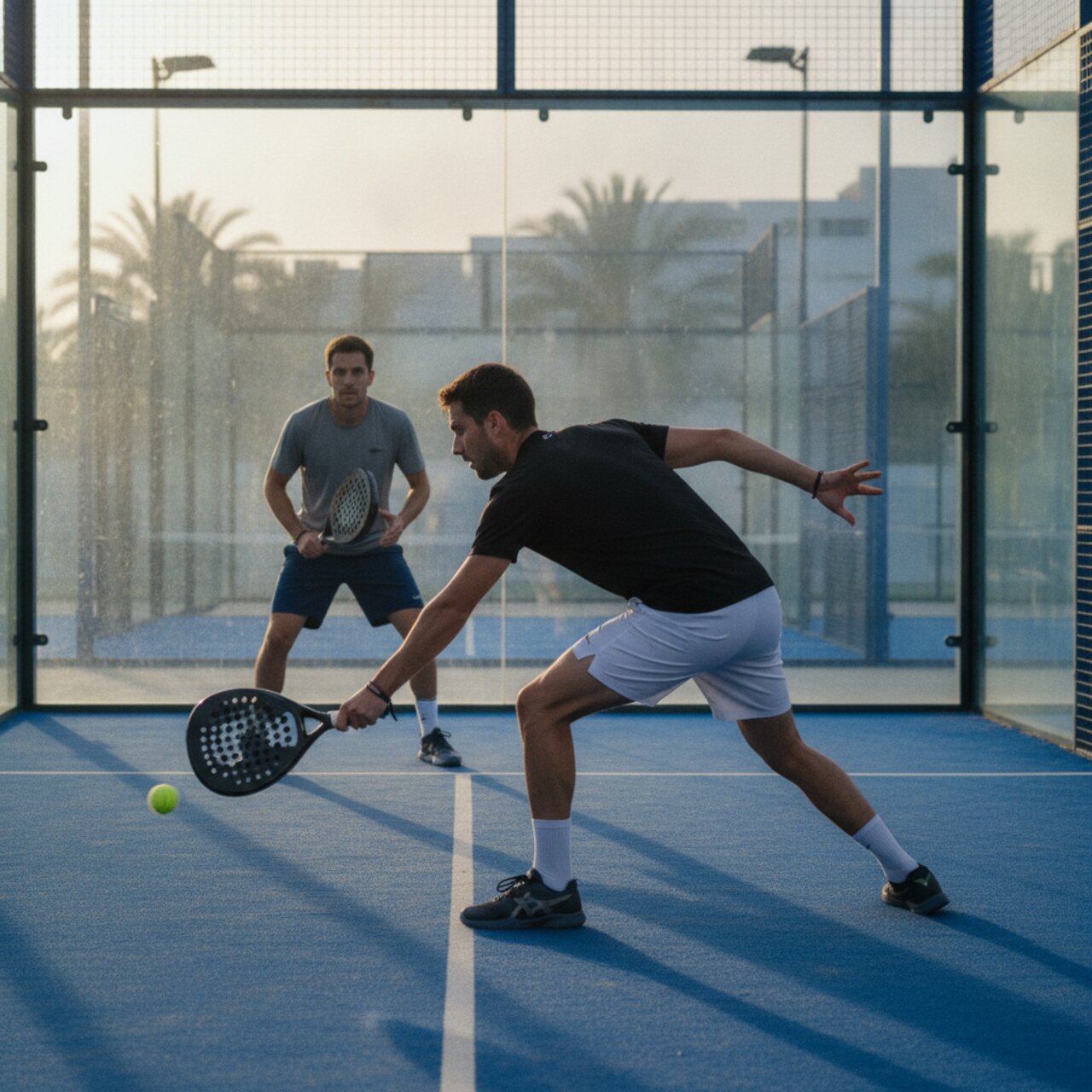
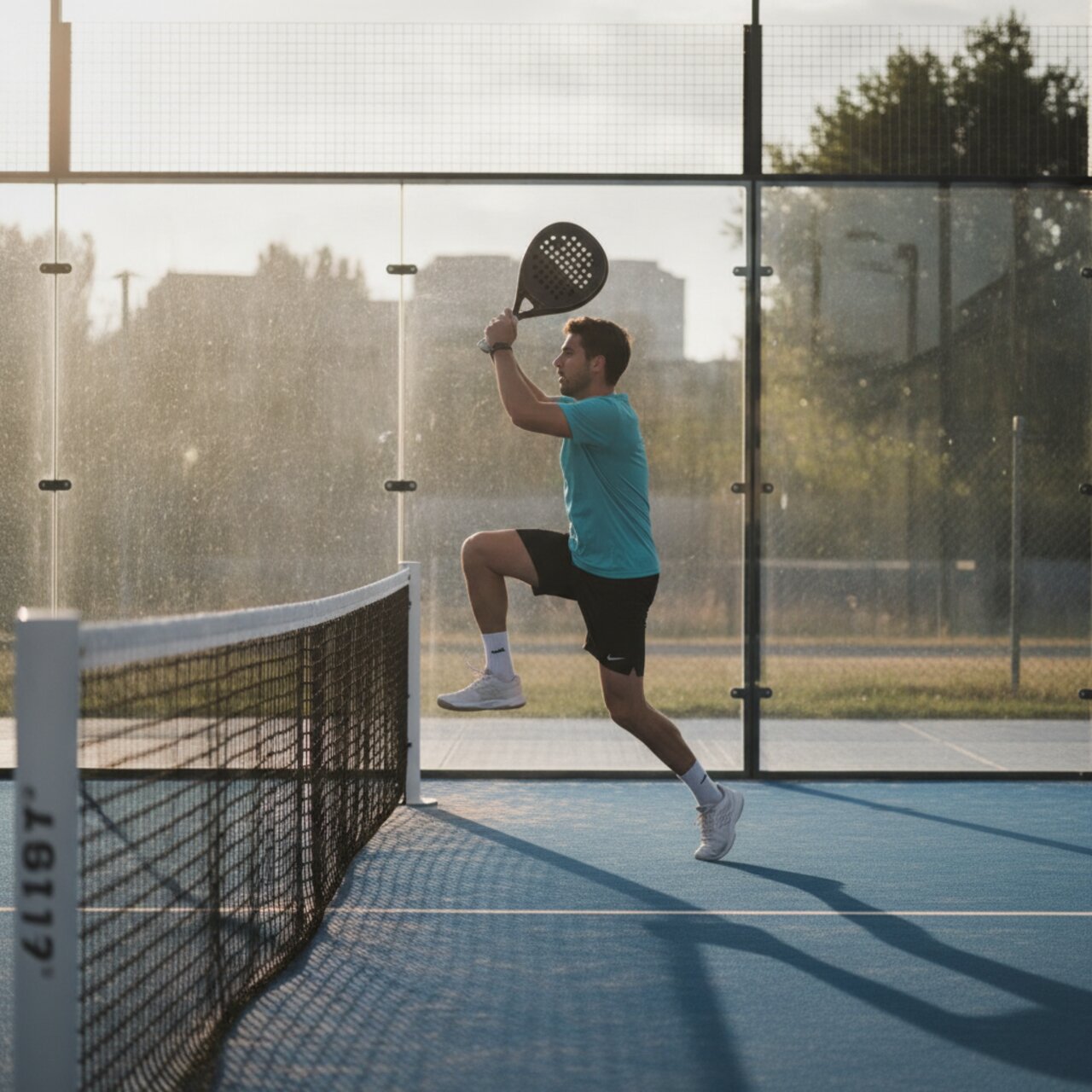
The classic moment is at the net with a mid-height ball. Your opponents expect you to either roll it cross-court or block it deep, so they cover the obvious. Show them one and play the other. The volley is the natural home of disguise because you can hold the paddle late and change the face at the last instant.
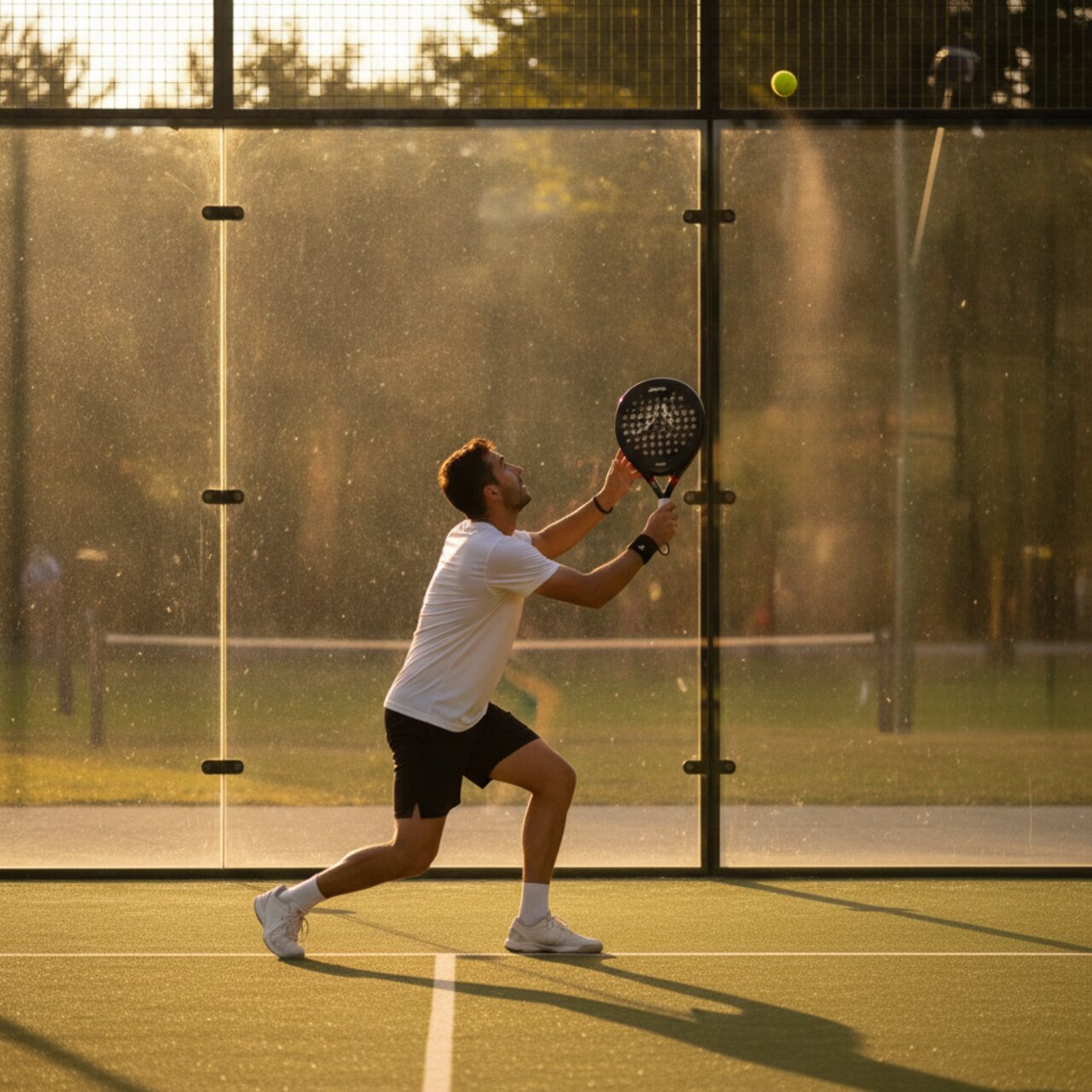
Another prime moment is the overhead. When you rise for a smash, opponents are guessing between a flat winner, a bandeja, and a lob. Identical preparation for all three is itself a fake: they cannot commit until you do. And on the defensive side, a drop shot from the back disguised as a drive, or the reverse, catches a net pair that has crept forward. Reading these situations correctly starts with knowing what your opponents are reading, which is the whole premise of opponents’ body language.
Do not fake when you are stretched, late, or off balance. Disguise costs you a fraction of preparation time, and if you do not have it to spare, you will simply mis-hit. Deception is a weapon for when you are in control, not a rescue for when you are not.
The Mechanics of Disguise
Every fake follows the same principle: keep your preparation neutral for as long as possible, then change one variable late. The variables you can hide are direction, depth, and shot type. You do not disguise all three at once; you pick the one that matters for the situation.
Neutral preparation. Take the paddle back the same way for as many shots as you can. If you prepare high and open for a lob but low and closed for a drive, you have told the story before you start. Groove one preparation that could become several shots. The best players look identical setting up a drive, a block, and a lob until the last moment.
Hide the paddle face. Direction in padel comes largely from the angle of the face at contact. Keep the face square and neutral through your backswing and only rotate it in the final few centimeters. A late wrist or forearm adjustment sends the ball somewhere your body never advertised.
Use your eyes and shoulders as bait. Opponents read your chest and your gaze. Glance cross-court, open your shoulders as if you are going that way, then hit down the line off a firm, quiet wrist. The head fake is subtle but real; a quick look one way pulls a reactive player half a step with it.
Change late, not early. The entire trick lives in timing. An early change is not a fake, it is just a different shot they can still read. The decision has to arrive so close to contact that they have already committed. Contact the ball out in front so you have the full window to delay.
Three Fakes Worth Owning
The lob-to-drive. Set up with an open face and a slightly lower body as though you are lifting a defensive lob. The net pair reads the lob and rocks back onto their heels, ready to retreat. Instead you flatten the face at the last instant and drive firmly at their feet or through the gap. Because they loaded to go backward, they cannot come forward in time.
The cross-to-line volley. At the net, open your stance and shoulders toward the cross-court diagonal, the shot they expect and cover. Hold the paddle, let them lean, then punch the volley down the line behind them. This is the highest-percentage fake in doubles because the down-the-line lane is usually the one they abandon to cover the angle.
The smash-to-drop. Rise into a full overhead position, load as if for a flat smash, and let the opponents backpedal to defend pace. Then, instead of powering through, cushion it into a soft drop shot or a controlled bandeja that dies short. A pair braced for a bullet has no time to sprint in for a dying ball.
Common Mistakes and How to Fix Them
Telegraphing before you even start. The most common fault is not a failed fake but the absence of one: distinct, readable preparation for every shot. Fix it by drilling several shots off one identical setup until neutral preparation is your default, not a special effort.
Overselling the fake. An exaggerated head swing or a huge body feint reads as theater and warns good opponents that something is coming. Subtlety wins. A small, believable look and a genuine-looking backswing beat a cartoon feint every time.
Committing to the fake too early. If you change the paddle face halfway through the swing, you have given them time to re-read and re-adjust. Delay the change until the last possible instant, which means taking the ball early and in front so you own that instant.
Faking when you have no time. Trying to disguise a ball you are already late on turns a fake into a mistake. Recognize when you are under pressure and simply play the clean, honest shot. Save deception for the balls you control, a judgment that ties directly into when to attack versus when to defend.
Drills to Build Deception
Same-preparation, two-outcome. Have a partner feed you identical balls at the net. Off one grooved preparation, alternate randomly between a cross-court volley and a down-the-line volley, calling the direction only after you have started your backswing. The aim is for your setup to look the same on camera regardless of where the ball goes.
Read-and-react with a caller. Play out points where a third person behind you calls “line” or “cross” a beat before your contact. This forces you to commit late and trains the late paddle-face change under mild pressure, the exact skill a real fake demands.
Fake-and-finish games. Play conditioned points where you only score double if the point ends with an opponent visibly wrong-footed, moving one way while the ball goes the other. Scoring the deception, not just the winner, rewires you to look for the fake instead of reaching for pace.
Making the Fake Part of Your Game
Deception is a layer you add on top of sound technique, never a substitute for it. You cannot disguise a shot you cannot hit cleanly in the first place, so build the honest bandeja, volley, and drive first, then learn to hide them. Sharpen your reading of the pair across the net with the body language guide, coordinate your movement using solid doubles positioning, and pin down the vocabulary in the padel glossary. Practice one identical preparation until several shots grow out of it, and opponents will stop trusting what they see, which is exactly when your real shots start winning free points.