By Mario GonzalezTechnique
How to Improve Your Padel Backhand: Technique, Fixes and Drills
Your padel backhand is the shot opponents hunt. Fix the grip, the contact point and the wall reads with a technique breakdown and four drills that work.
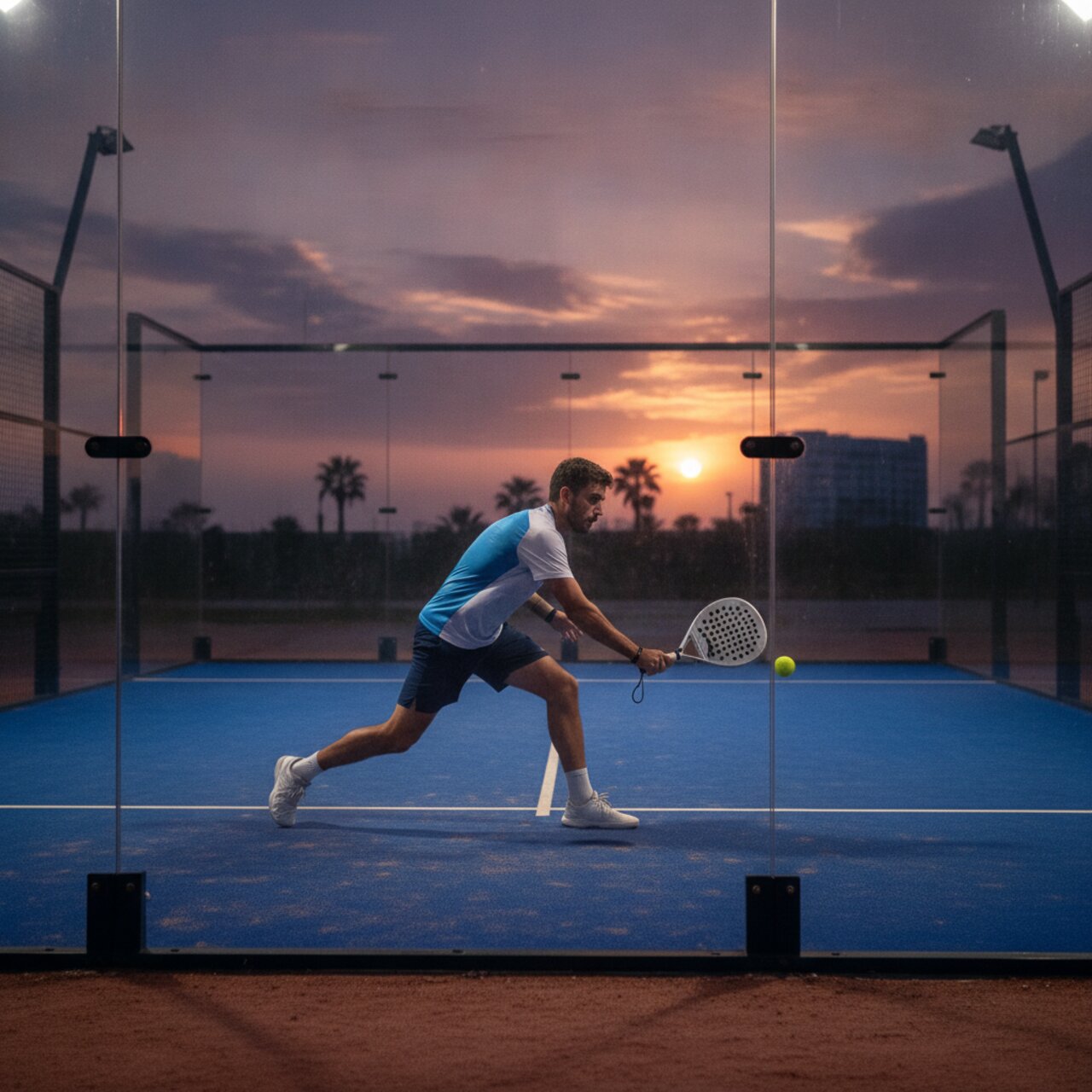
Improving your padel backhand almost never requires a new swing. It requires standing somewhere else. The backhand is the shot opponents deliberately hunt: they serve at it, lob cross-court into it, and jam it at your hip during every volley exchange. Most club players have drilled the bandeja for months, can name three kinds of smash, and have never spent a single session on the side of the body that receives half the balls.
There is good news buried in that. On a padel court the backhand is a much smaller problem than it is in tennis. The court is 10 metres wide, the ball arrives at chest height or below most of the time, and the glass behind you turns a lot of mistakes into second chances. Almost everything that goes wrong with a backhand at club level is positional, and positional faults are the fastest ones to fix.
Why the Padel Backhand Gets Attacked
Two structural facts make the backhand a target. First, a right-handed player standing on the left side has their backhand facing the middle of the court, which is where the highest-percentage balls go. Every ball down the centre, every cross-court lob from the opposite diagonal, and most smashes that come back off the glass land there. That is why the left is called the backhand side, and why so many pairs put their most reliable backhand on it. The trade-offs are covered in more depth in the guide to choosing the left or right side.
Second, the backhand is the side where you have the least natural reach and the least room to swing. Your hitting arm crosses your body, so a ball that arrives 30 centimetres too close jams you completely, while the same ball on the forehand side can be absorbed with a bent elbow. The margin for positional error is smaller, and opponents can feel it within three or four points.
None of this means you need a bigger backhand. It means you need an earlier one.
Grip: Continental, and Why Two Hands Is a Trap
Use the continental grip, the same one that produces the bandeja, the volley and the serve. Hold the paddle as though you were about to hammer a nail into the side wall. With a continental grip you can hit forehand, backhand, volley and overhead without ever changing your hand, which matters enormously in a sport where exchanges at the net happen in half a second.
Players coming from tennis often want to bring a two-handed backhand across. Resist it. The extra hand shortens your reach by roughly the length of your forearm, kills your ability to play the low balls that dominate padel, and makes the wall exits near the glass close to impossible. A two-handed backhand can work as an occasional attacking option from a comfortable waist-high ball, but building your game on it will cost you far more balls than it wins. If your grip keeps slipping mid-rally, the problem may be the grip itself rather than your hand, and the guide to changing your paddle grip covers when to replace it.
One adjustment is worth making: hold the paddle lightly. A tension score of about 4 out of 10 lets the wrist stay firm at contact without locking the forearm. Squeezing hard is the single most common cause of backhands that fly long.
The Backhand Groundstroke, Step by Step
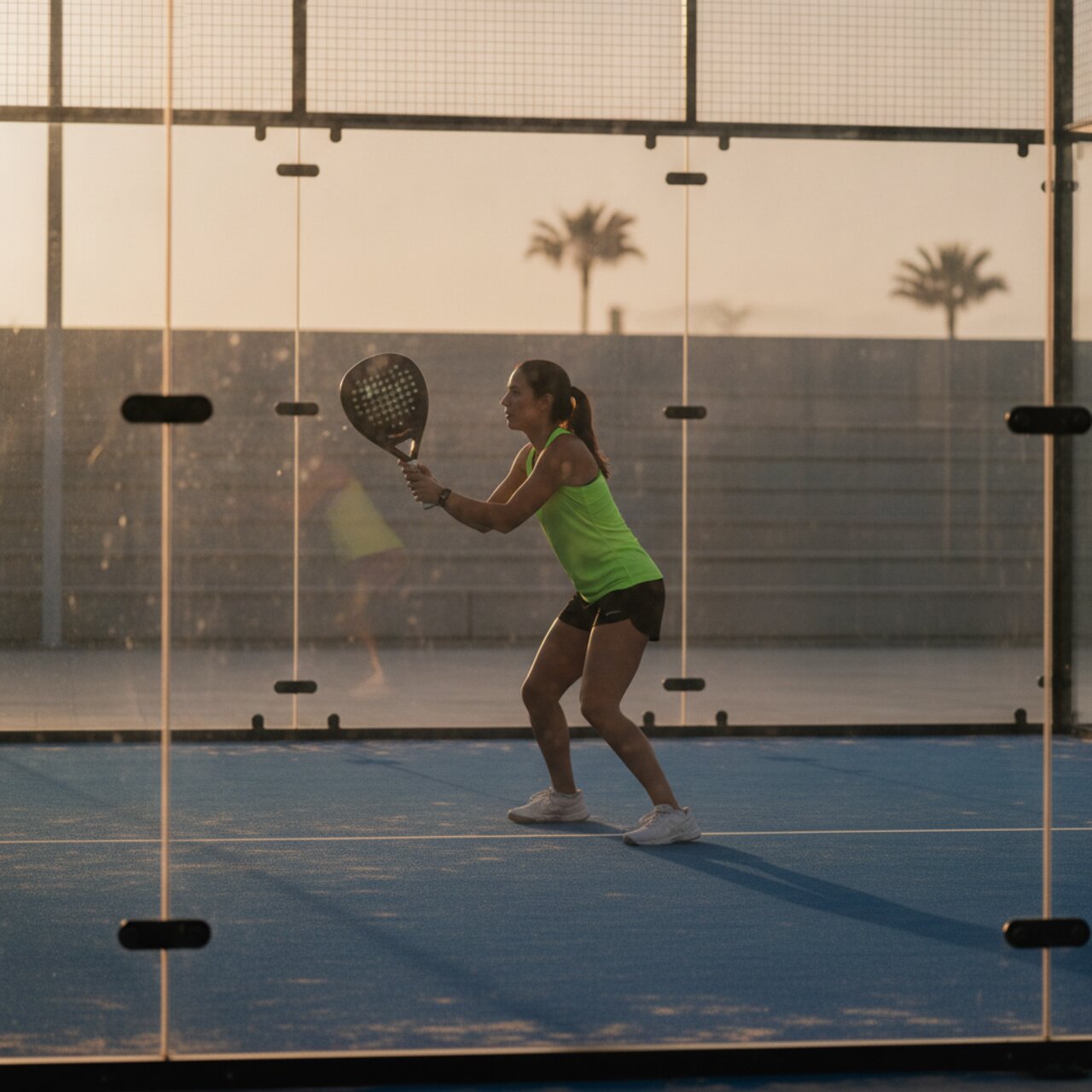
Turn before you step
The turn is the shot. As soon as you read that the ball is coming to your backhand, rotate your shoulders and hips so your non-dominant shoulder points toward the net. Do this before you move your feet, not while you are moving them. Players who run first and turn later arrive square to the ball and have to manufacture a swing out of nothing.
Your free hand should be on the throat of the paddle during the turn. It does two useful things: it forces the shoulder rotation to actually happen, and it gives you a reference point for where the paddle is.
Find the contact point in front
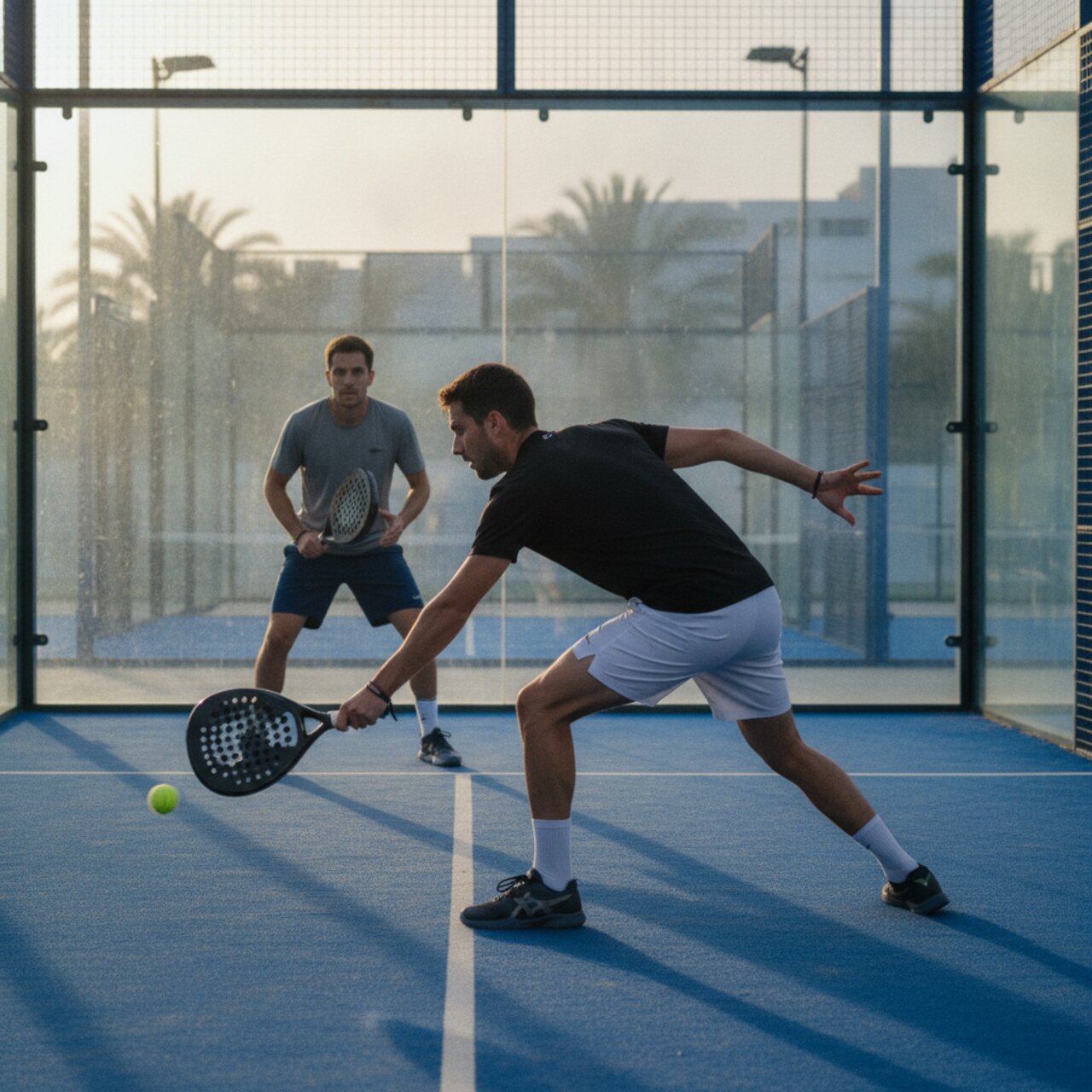
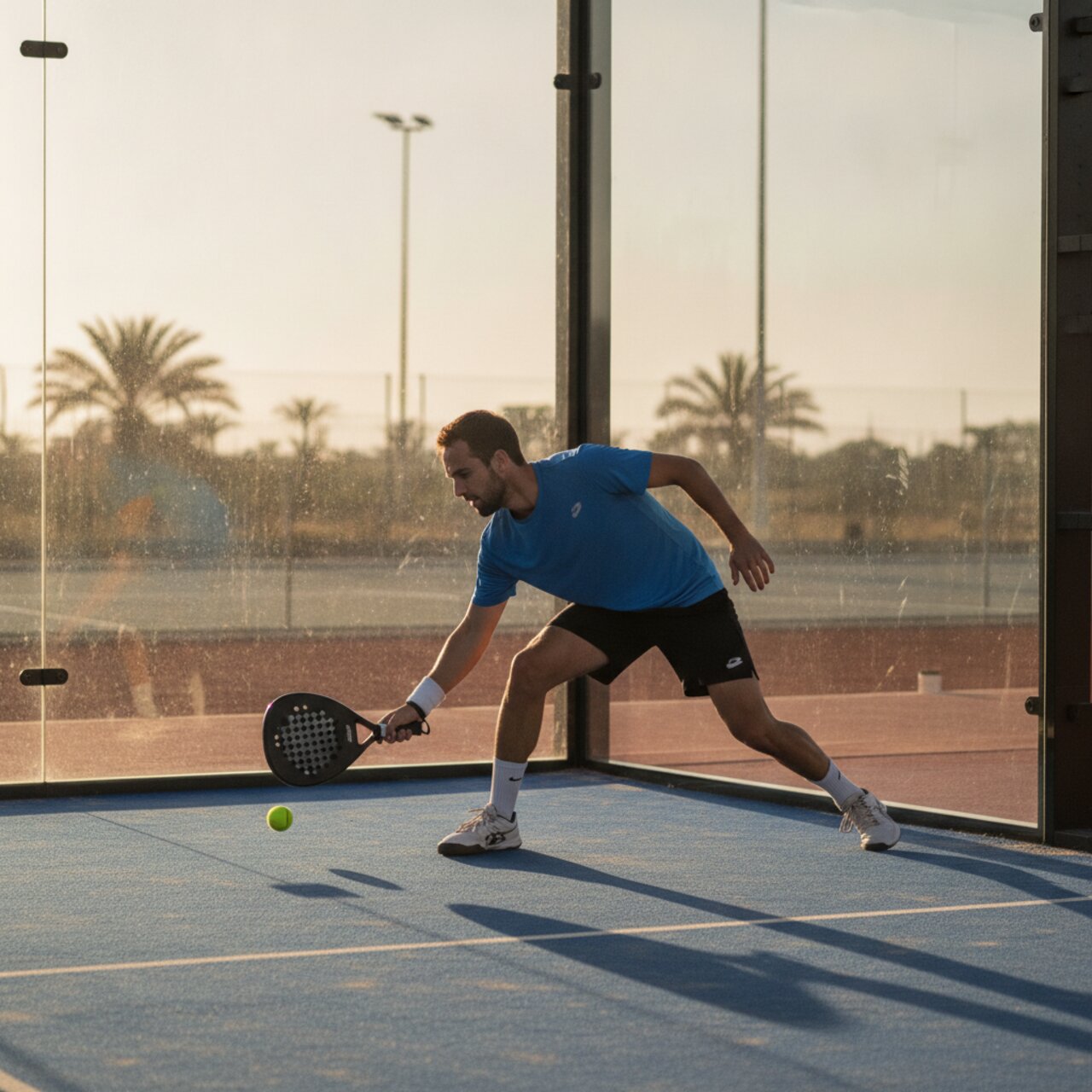
Contact belongs in front of your leading hip, roughly at knee-to-thigh height for a defensive ball. If you can see the paddle in your peripheral vision at the moment you strike, you are in the right place. Behind the hip and the shot has no direction, no depth, and usually goes to the side glass on your own half.
Take a low base. Bend at the knees rather than at the waist, because bending at the waist drops your head and you lose sight of the ball at the worst moment. On low balls near the glass, the difference between a clean backhand and a shanked one is often five centimetres of knee bend.
Push through, then finish high
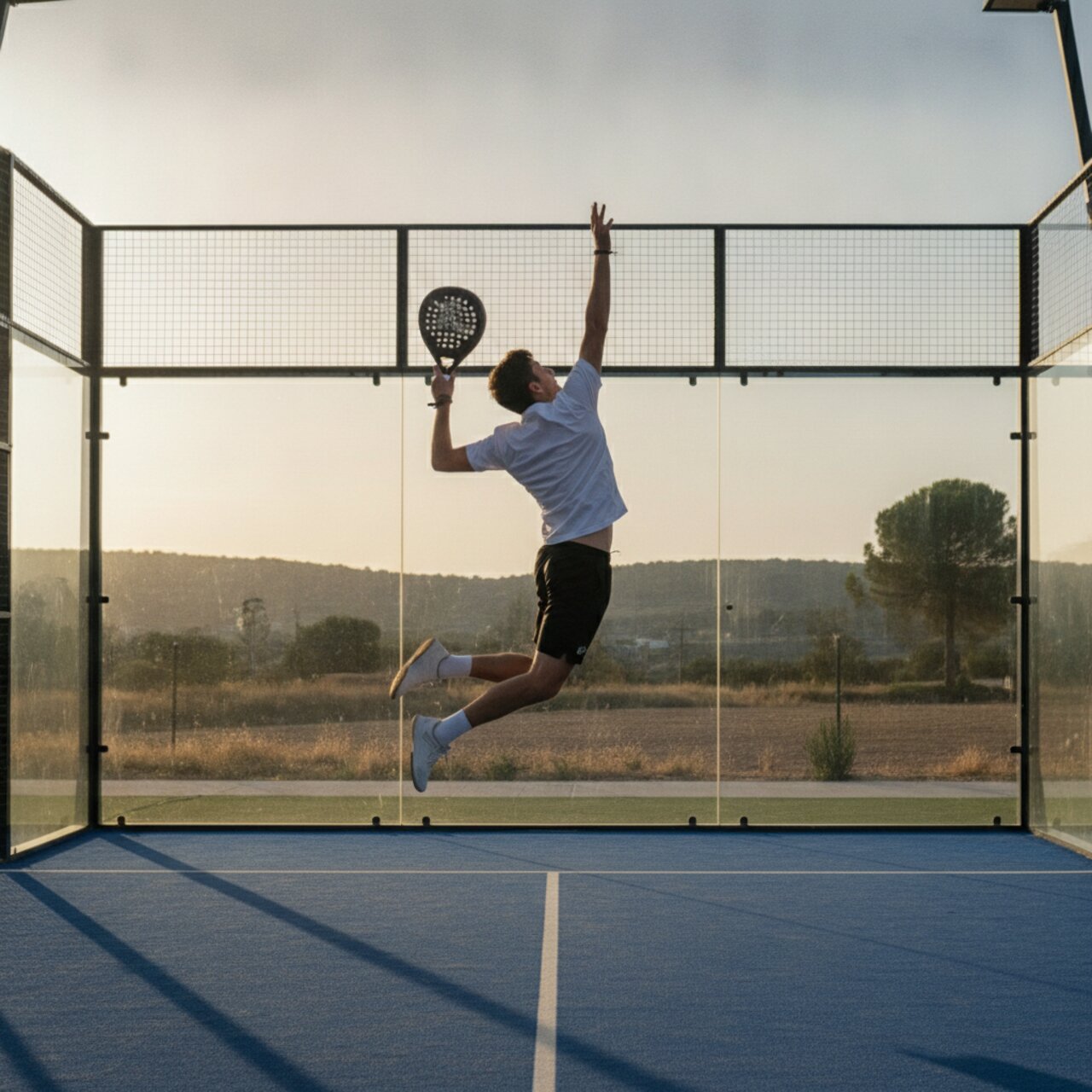
Swing from low to high with a firm wrist and push through the ball rather than snapping at it. Padel backhands do not need power. A defensive backhand needs depth and height; an attacking one needs placement at the opponent’s feet. Neither needs a fast arm.
Finish with the paddle head above the level of your shoulder and your chest turned toward the target. If your follow-through stops at the ball, you have decelerated through contact, which is what produces short floating replies that get smashed.
The Backhand Off the Back Wall
This is where the shot is genuinely won or lost. Most club backhand errors are not backhand errors, they are wall-reading errors that happen to occur on the backhand side.
Turn side-on to the glass early and travel backward with short steps, keeping the paddle up. Let the ball pass you, then hit it as it comes forward off the wall. The instinct to reach for the ball while it is still travelling toward the glass is the one you must kill: you end up cramped against the wall with no swing path and the ball behind your body.
Give yourself a full metre of space from the glass. The wall rebound on a padel court brings the ball further out than most players expect, and you can always step in. You cannot step back once the ball is on you. The mechanics of the rebound itself, including the double-wall corners, are worth studying separately in the back wall guide.
The Backhand Volley: The Shot You Hit Most
Count them one match and you will be surprised. At the net, the backhand volley outnumbers the backhand groundstroke by a comfortable margin, because opponents aim at the middle and the middle is your backhand when you are on the left.
The volley is a block, not a swing. Paddle out in front, elbow slightly bent, wrist firm, and a short punch of maybe 30 centimetres. Take the ball early and high when you can, and put it deep at the feet of the player who is furthest back. The full mechanics live in the volley technique guide, and everything there applies double on the backhand side, where a long swing simply will not fit in the time available.
The one adjustment specific to the backhand volley: keep your paddle head above your wrist on every ball above hip height. Dropping the head is what turns a routine volley into a ball that sits up for the smash.
Common Padel Backhand Mistakes and How to Fix Them
Facing the net. Standing square makes the arm do all the work, and the arm alone cannot generate depth. Fix it with the free hand on the paddle throat during preparation, which makes the turn automatic.
Contact behind the hip. Usually a footwork symptom rather than a swing fault. Ask yourself where you arrived rather than what your arm did. Getting there half a second earlier fixes it more reliably than any technical cue.
Squeezing the grip. Tension in the hand travels up the forearm and turns a push into a jab. Loosen the hand and the paddle face stops opening at contact.
Hitting hard because the backhand feels weak. Compensating for a shot you distrust by swinging faster reverses the outcome you want. A deep, high, unspectacular backhand keeps you in the point. Depth is the objective, not speed.
Backing up while hitting. Falling away from the ball drains the depth out of the shot. Arrive deeper than you need, then step forward into contact, even if the step is small.
Standing too close to the glass. The most common wall fault, and the easiest one to correct consciously. Start a metre off and let the ball come to you.
Drills That Actually Move the Needle
Shadow turns, no ball. Two minutes before you play. Turn side-on, free hand on the throat, low base, swing to a high finish. Twenty repetitions. It sounds trivial and it fixes more backhands than any on-court drill, because the turn is a habit rather than a skill.
Backhand-only cross-court. Play cross-court rallies with your partner where you may only use the backhand, aiming for depth past the service line. Count how many out of twenty land deep. Under twelve and the problem is almost always that you are hitting on the way backward.
Wall feeds with a mark. Have a partner feed balls hard into the back glass on your backhand side. Put a cone or a bag a metre out from the wall and make yourself set up behind it every time. Ten balls, rest, ten more. The cone does the teaching.
Backhand volley blocks. Stand at the net while your partner drives at your backhand hip from the baseline. No swing allowed, only a block, and every ball must land past the service line. Thirty balls. This is the drill that most directly transfers to match play, because that exact ball arrives dozens of times a match.
If you train alone, the wall routines in the guide to padel drills you can do by yourself cover backhand repetitions without a partner.
Where the Backhand Fits in the Rest of Your Game
A reliable backhand changes what opponents are willing to do. Once three or four attacks down the middle come back deep and heavy, pairs stop aiming there and start hunting angles instead, which is a much lower-percentage plan for them. You do not need a weapon on that side. You need a shot that never gives away a free point.
Build it in the order the match uses it: the volley first, because you hit the most of them; then the wall exit, because that is where the errors cluster; then the groundstroke and the lob. Pair it with sound court position from the three zones guide, and if any of the shot names here are new, the padel glossary has them in one place. Track a few matches and count your backhand errors specifically. Most players find the number is smaller than the feeling, and knowing that is worth a couple of points a set on its own.