By Mario GonzalezTechnique
Padel Grip Types: Continental and Beyond
Padel grip types explained: how to find the continental, the bevel map, grip pressure, when a grip change is worth it and the tennis habits that cost points.
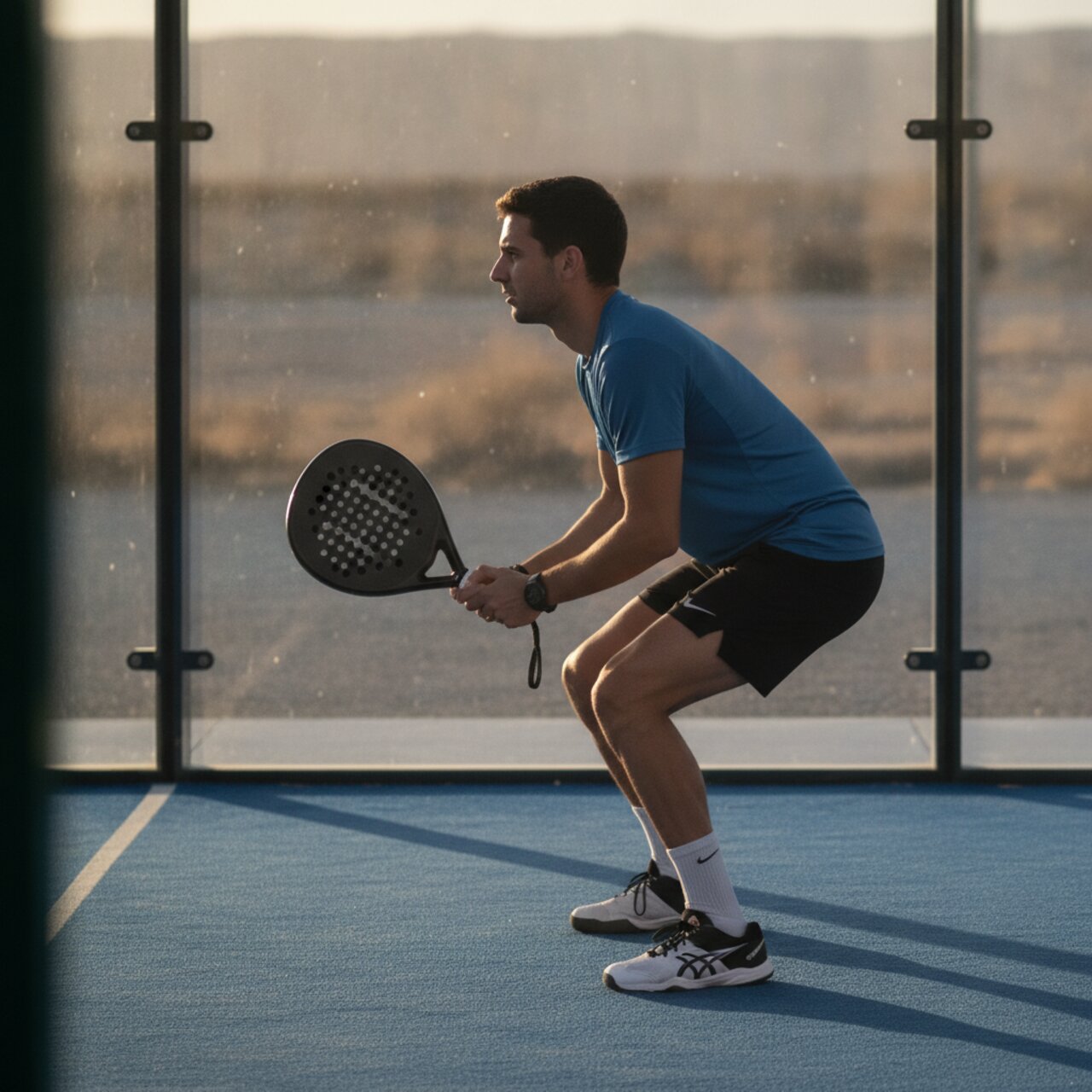
Two players can own the same paddle, stand in the same spot and swing along the same path, and one will drop the ball at the net player’s feet while the other shanks it into the side glass. The difference is usually in the hand. Padel grip types get a fraction of the coaching time that footwork and shot selection get, yet the grip sets the angle of the paddle face at contact, and the face angle decides where the ball goes far more directly than anything your arm does.
This is not about the overgrip you wrap around the handle, which is a separate question of tackiness, thickness and how often you replace it. This is about how you hold the thing: which bevel your knuckle sits on, how hard you squeeze, and whether you should ever change grips in the middle of a point.
The Short Answer: Continental, for Almost Everything
Padel is a one-grip sport. The continental grip produces the serve, the volley, the bandeja, the smash, the lob, the drop shot and both groundstrokes, and the overwhelming majority of players at every level, including the professional tour, play entire matches without changing it.
That is unusual for a racket sport, and it is not laziness. It falls out of two features of the court. A net exchange in padel gives you roughly half a second between contacts, which is not enough time to rotate your hand around the handle and get it back. And the paddle has no strings, so the spin advantage that justifies specialised grips in tennis mostly does not exist here. You trade a small amount of topspin for the ability to hit any shot with whatever grip you happen to be holding when the ball arrives.
If you take one thing from this article: find the continental, then stop thinking about it.
How to Find the Continental Grip
Three checks, all of which land in the same place.
The handshake. Hold the paddle by the throat with your free hand so the face is perpendicular to the ground, edge pointing at the net. Now shake hands with the handle. That is continental.
The hammer. Hold the paddle as if you were about to hammer a nail into the side glass with the edge of the frame. Same grip, and this version tends to stick better because it also teaches you that the paddle is an extension of the forearm, not a separate object at the end of it.
The bevel. A padel handle is an octagon. Number the bevels for a right-hander with 1 on top and count clockwise as you look down at the butt cap. The continental puts the base knuckle of your index finger on bevel 2, with the V between thumb and index finger sitting on the top-left edge. Left-handers count anticlockwise and land on the mirror image.
Then check it: let your arm hang loose at your side with the paddle in your hand. The face should sit roughly perpendicular to the floor, blade pointing forward. If the face has rolled toward the ground, you have drifted into an eastern or semi-western grip without noticing.
Two more details that matter as much as the bevel. Spread your index finger slightly up the handle, a knuckle’s width apart from the others, in a loose trigger shape. It buys you a surprising amount of feel on drop shots and low volleys. And keep the butt of the handle at the heel of your hand rather than choking up on the grip, which is the single most common way beginners lose reach and power without knowing why.
Padel Grip Types Beyond the Continental
The other grips are worth knowing, mostly so you can recognise when you have accidentally adopted one.
Eastern forehand (bevel 3)
The knuckle rotates one bevel clockwise, closing the face slightly. Some players with a tennis background land here and stay, and it is not catastrophic. You get a marginally more comfortable forehand drive on high balls and you pay for it on everything else: low balls dying off the back glass become very hard to lift, and every volley wants to fly long because the face is closed at a contact point where you need it open.
If you play this grip, at least be honest about the trade. You are optimising for the shot that wins the fewest points on a padel court.
Semi-western and western (bevels 4 and 5)
The tennis import that causes the most damage. A western grip on a padel court closes the face so far that a ball below knee height, which is most of them, cannot be lifted without an unnatural wrist flick. You will see it in players who arrive from tennis with a big forehand and spend six months wondering why their glass exits fail.
There is no situation in padel that rewards a western grip. If this is you, change it deliberately in the off-season rather than mid-match, because the transition costs a few weeks of feeling like a beginner.
Eastern backhand / continental-backhand shift (bevel 1)
The one legitimate grip change some intermediate and advanced players make. Rotating the knuckle to bevel 1 opens the face for the backhand side and gives you a firmer wrist on the backhand volley and more bite on a topspin backhand from the back of the court.
Most coaches will tell you not to bother, and for club players they are right. The change is worth exploring only if two things are true: you already have a reliable continental backhand, and you find your backhand volley face collapsing on hard balls. The relevant mechanics are covered in the guide to improving your padel backhand.
The two-handed backhand
Rare in padel and generally discouraged, because the handle is short and the second hand costs you the reach you need on defensive balls in the corners. Junior players and tennis converts sometimes bring it. It survives as a situational shot on high balls in the middle of the court, not as a default.
The smash grip
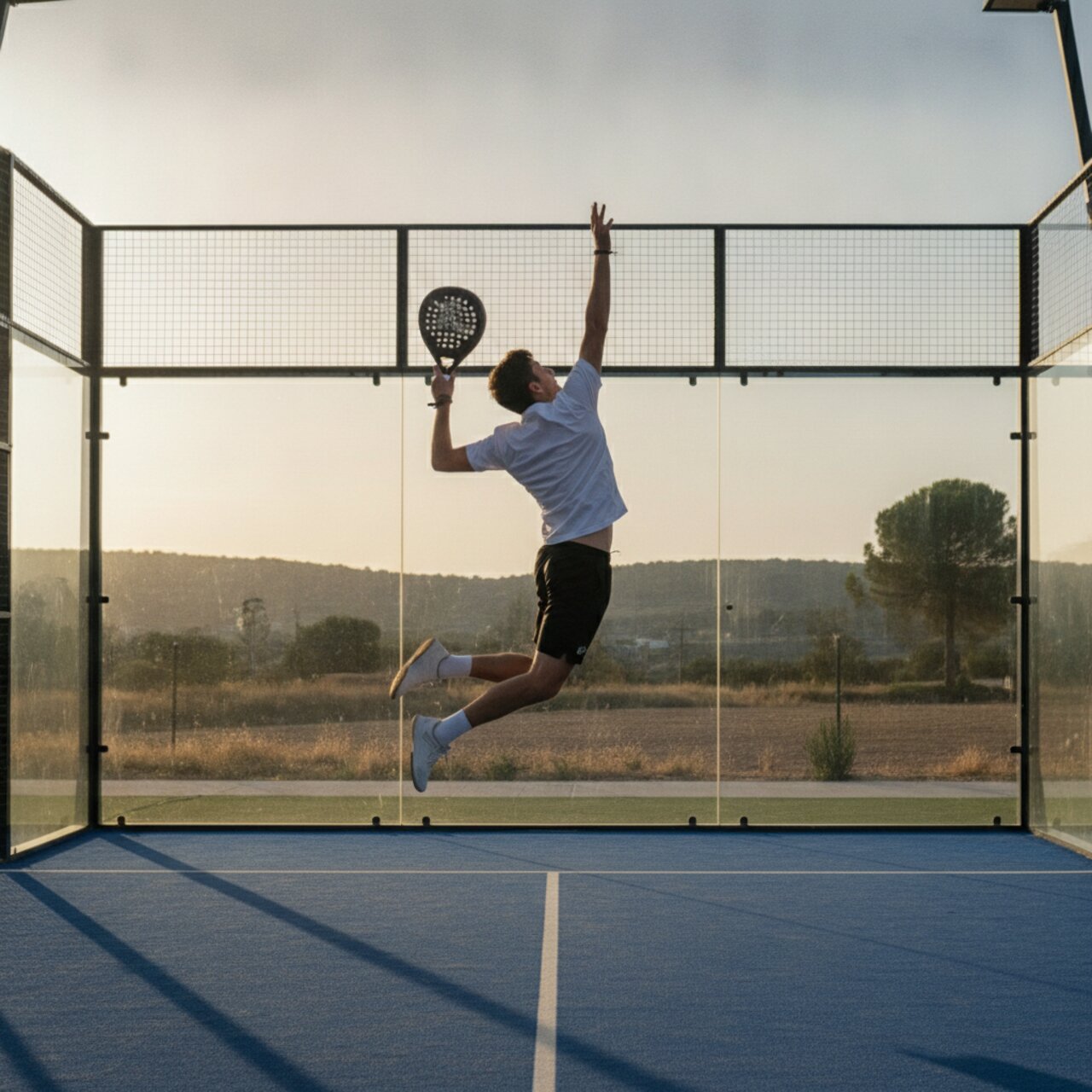
Same continental, but many players naturally slide their hand a centimetre or two down toward the butt cap for the smash to add leverage. That is fine, and it happens during the preparation, not during the swing. The grip itself does not change, which is exactly why the continental is the smash grip, the serve grip and the bandeja grip all at once.
Grip Pressure: The Variable Nobody Rates
Grip type is a one-off decision. Grip pressure is a decision you make on every ball, and it wrecks more shots than the wrong bevel ever will.
Rate your squeeze from 1 to 10, where 10 is hanging off a ledge. During a rally you want to sit around 3 or 4: firm enough that the paddle does not turn in your hand, loose enough that your forearm is not braced. On a smash you can go to 6 or 7 briefly at contact. On a drop shot you want 2, because the shot is entirely feel and a tight hand cannot feel anything.
The tell for a player squeezing too hard is a long, flat ball that hits the back glass on the full, plus a forearm that aches after 40 minutes. Loosening the hand fixes both, and it is the fastest single improvement available to most club players. Between points, let the paddle hang from the wrist strap and shake your hand out.
Wear the strap, incidentally. It is mandatory under the rules and it lets you play with a loose hand without any fear of the paddle leaving it.
Should You Ever Change Grip Mid-Point?
Almost never, and the reason is arithmetic. In a fast net exchange the ball reaches you in around half a second. Rotating your hand and re-seating it takes most of that, and the failure mode is not a slightly worse shot but a total mishit with the paddle half-turned.
Two exceptions hold up. The first is a deliberate backhand-grip shift when you have genuine time, which in practice means from the back of the court on a slow, high ball. The second is a small forward or backward slide along the handle rather than a rotation: choking up a couple of centimetres on a tight volley in the middle, sliding down for extra reach on a defensive lob. Sliding is fast, rotating is not.
Everything else is a habit that will punish you the first time somebody hits hard at your body.
Common Padel Grip Mistakes and How to Fix Them
Bringing your tennis forehand grip to the court. The most frequent one, and the most expensive. Check the face angle with your arm hanging by your side before every match until continental is your default.
Choking up on the handle. Losing three or four centimetres of leverage makes your lobs short and your smashes weak. The butt cap belongs against the heel of your hand.
Squeezing at 8 out of 10 all match. Produces long balls, dead hands and sore forearms. Aim for 3 or 4 and let the paddle do the work.
Changing grips mid-rally at the net. You do not have the time and the mishits are worse than any face angle you were chasing. Play the continental and adjust the paddle face with the wrist and forearm instead.
All four fingers bunched together. Spreading the index finger slightly costs nothing and adds real touch on the drop shot and the low volley.
Blaming the grip for a contact point problem. If the ball is arriving level with your body or behind it, your grip is not the issue. Contact point and footwork are, and both the forehand guide and the back wall guide deal with that directly.
Drills to Lock In the Grip
The hanging check, ten times before you play. Take the grip, let the arm hang, look at the paddle face, correct if needed. Ten repetitions takes 30 seconds and builds the reference you will use for the rest of your padel life.
Continental-only volley sets. Play three volley-to-volley sets across the net with your partner and consciously refuse to adjust your hand on any ball, including the ones at your body. It feels wrong for the first minute and then stops feeling like anything, which is the whole point.
Pressure ladder. Rally from the back of the court squeezing at 8, then at 5, then at 3, ten balls each. Notice where the ball lands in each block. Almost everyone finds their deepest, most controlled balls come out of the loosest hand.
Wall touch drill. Against the glass, hit 30 soft alternating forehand and backhand volleys from two metres out, keeping the index finger spread and the pressure at 2 or 3. Feel drills of this kind work well solo, alongside the routines in the guide to padel drills you can practise alone.
Where the Grip Ends and the Handle Begins
Grip type and grip size are different problems that get confused constantly. If the handle feels too thin and the paddle twists on off-centre hits, add an overgrip rather than changing your bevel. If it feels too thick and your fingers cannot wrap comfortably, strip an old layer before you buy anything. The practical side of that is in the walkthrough on changing your padel racket grip.
Get the continental, spread the index finger, keep the butt cap in your palm and hold at 3 out of 10. That combination covers every shot on a padel court, and it removes a decision from a game that already asks you to make one every half second. If any of the terms here are new, the padel glossary has them collected in one place.