By Mario GonzalezEquipment
Padel Racket Maintenance: Cleaning, Storage and Lifespan Guide
A practical padel racket maintenance guide: how to clean the face, store it safely, avoid heat damage, and extend the lifespan of your pala for longer.
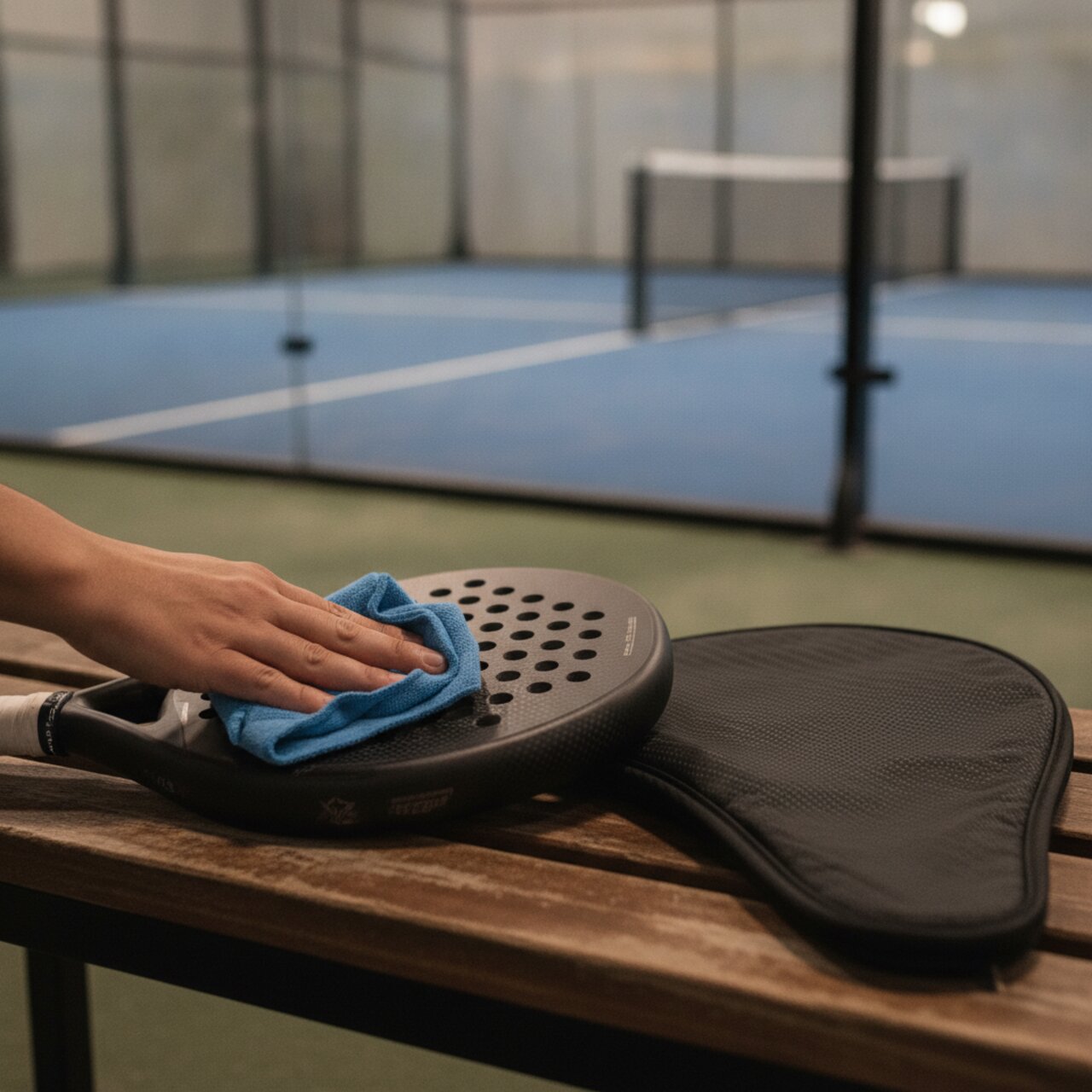
A padel racket is the most expensive piece of gear most players own, and it’s also the one they neglect the most. Good padel racket maintenance is the difference between a pala that holds its pop and balance for two full seasons and one that goes soft, cracks at the frame, or develops a dead spot after six months. None of it is complicated. It comes down to cleaning the surface properly, controlling where and how you store it, and replacing the parts that wear out before they damage the parts that don’t.
This guide covers the routines that actually matter, the storage mistakes that quietly kill rackets, and a realistic timeline for how long a pala should last.
What Damages a Padel Racket
Before the maintenance routine, it helps to know what you’re protecting against. Four things age a racket faster than normal play.
Heat. EVA and FOAM cores soften when warm. A racket left in a car trunk at 50°C (122°F) loses rigidity, and repeated heat cycles permanently change how the core responds. Carbon and fiberglass faces also expand and contract, stressing the bond between layers.
Moisture and sweat. Sweat is slightly acidic and corrosive. Left on the grip and frame, it degrades the overgrip, seeps into the handle, and over time contributes to the dreaded broken or rattling handle.
Impact against hard surfaces. Most cracked frames don’t come from hitting the ball. They come from scraping the court when you dig out a low volley, or clipping the glass and the metal posts. The frame edge is the weakest structural point on the racket.
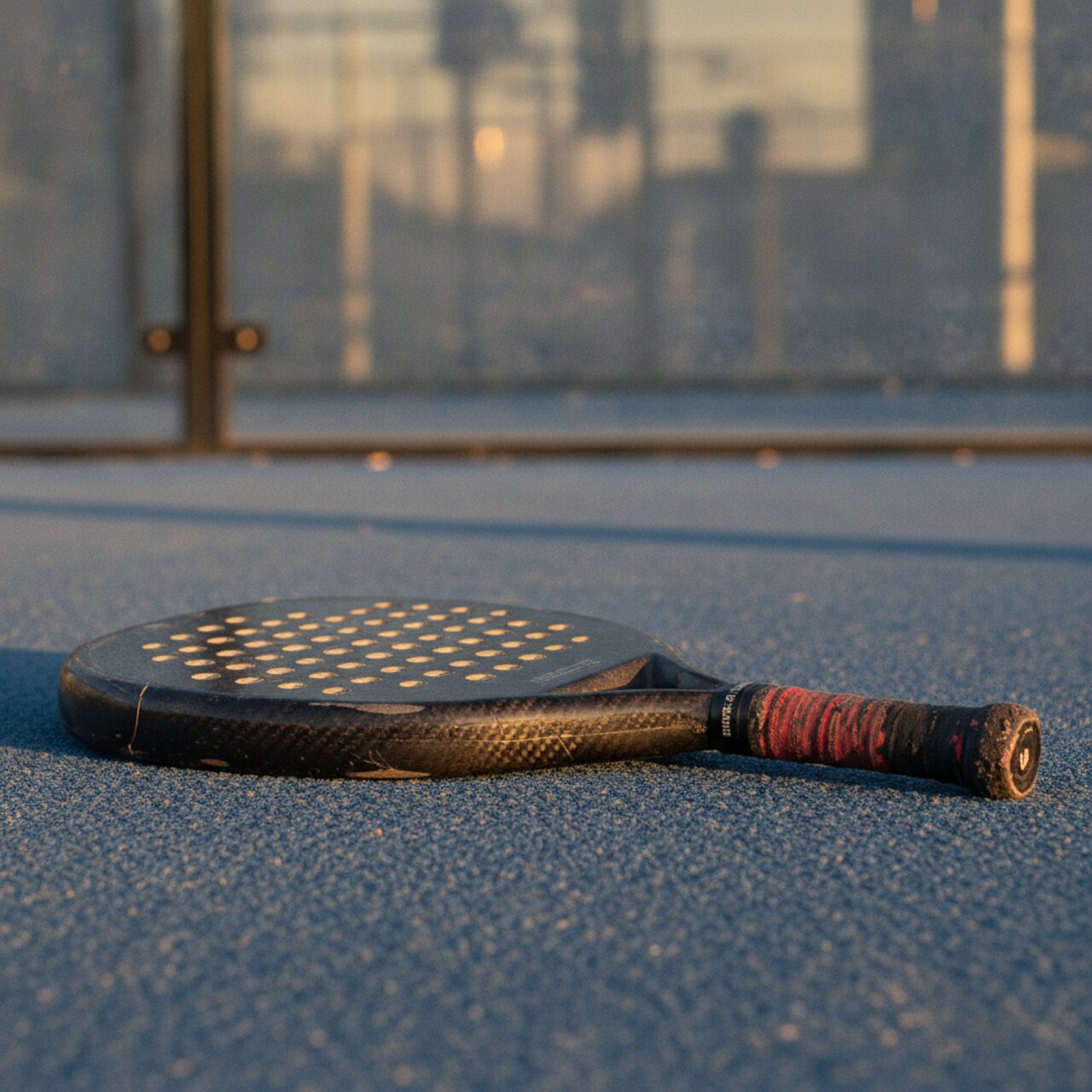
Plain time and use. Cores fatigue. Every ball strike compresses the EVA a tiny amount, and after roughly 70-100 hours of play the core no longer rebounds the way it did new. This is normal and unavoidable, but the other three factors accelerate it dramatically.
If you understand your equipment broadly, see how the core and face construction work in our guide on how to choose a padel racket, which explains why some rackets tolerate abuse better than others.
Cleaning Your Padel Racket
Clean the racket face after every two or three sessions, and always after playing on a dusty or sandy outdoor court.
For the face, use a soft microfiber cloth lightly dampened with water. Wipe in the direction of the surface texture to lift off ball fuzz, court dust, and the green residue that builds up from the felt. For stubborn marks, add a drop of mild soap, then wipe again with a clean damp cloth to remove any residue. Avoid alcohol, acetone, or any solvent. They strip the protective lacquer and dull the carbon finish.
Pay attention to the roughness coating. Many modern rackets have a textured or sandblasted surface designed to grip the ball for more spin. Caked-on dust fills those micro-pits and kills the effect. A clean rough surface is one of the cheapest ways to keep your spin on smashes and the víbora.
For the holes in the racket head, blow out trapped grit or use a dry brush. Dirt packed into the perforations adds weight unevenly and traps moisture against the core.
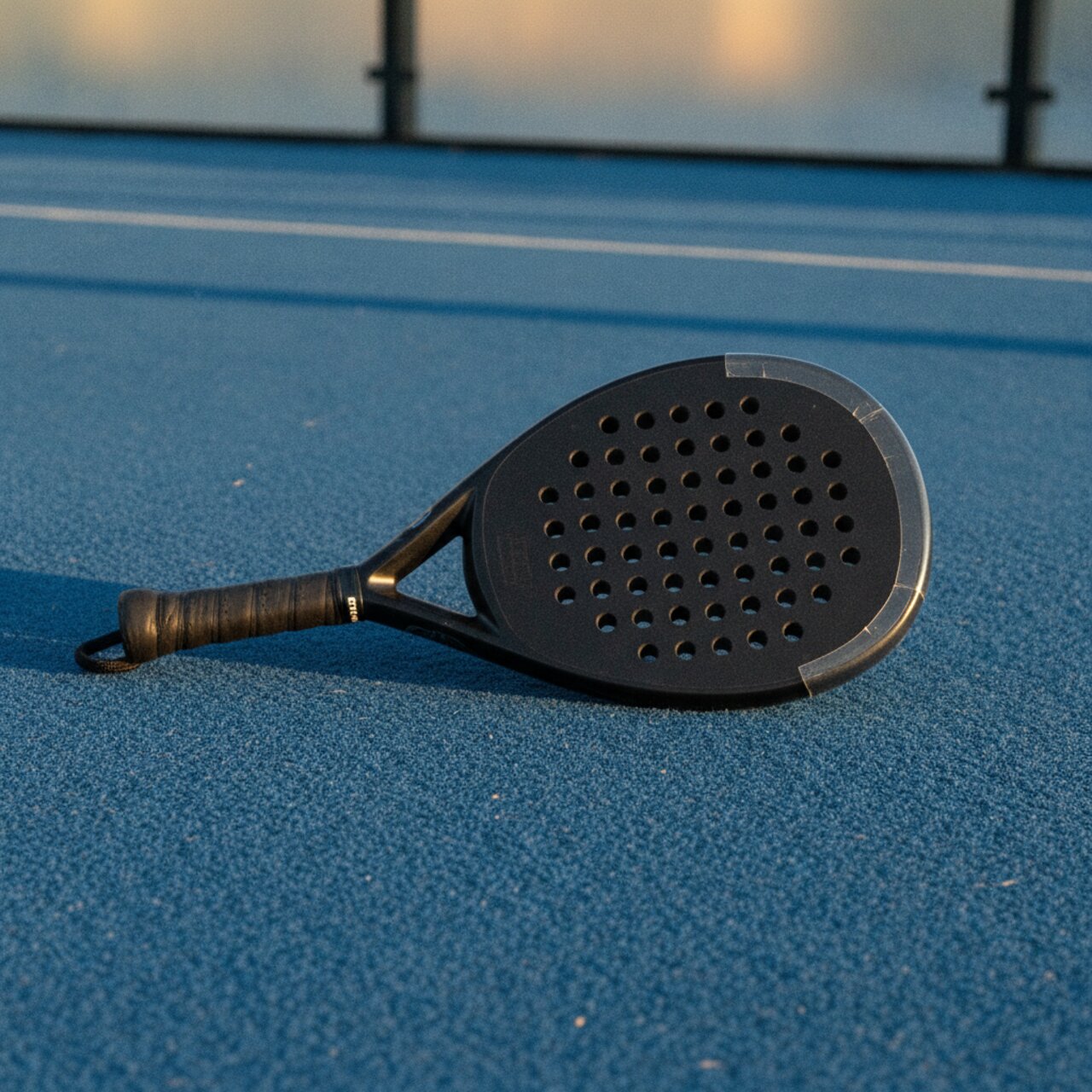
Don’t ignore the bumper guard along the top edge. Wipe it down and check it at the same time. It’s there to take the scrapes so the frame doesn’t, and a clean guard is easier to inspect for wear.
Grip and Overgrip Care
The grip is the part you touch every point, and it’s the cheapest thing to replace, so there’s no excuse for letting it rot.
Replace your overgrip every 8-15 hours of play, or sooner if it goes slick or starts to unravel. A worn overgrip makes you squeeze harder to keep the racket from twisting, which causes forearm fatigue and inconsistent contact. If you’re not sure how to wrap one cleanly, our walkthrough on changing your padel racket grip covers tension and overlap.
After a sweaty session, unwrap nothing but do let it breathe. Pull the racket out of your bag and let the grip air-dry rather than sealing damp foam inside a closed cover overnight. Trapped sweat is what migrates down into the handle.
Keep the base grip dry. Most players never touch the base grip underneath, which is fine, but if sweat consistently soaks through, peel the overgrip after heavy sessions and let the base dry before re-wrapping. A base grip that stays permanently damp will harden and crack.
How to Store a Padel Racket
Storage is where most damage happens, because it’s invisible until the racket is already ruined.
Always use the cover. Your racket came with a thermal cover or a padded bag slot for a reason. It buffers temperature swings and protects the frame from knocks. Use it every time the racket isn’t in your hand.
Never leave a racket in a hot car. This is the single most common way players destroy a pala. A car interior in summer climbs well past 60°C (140°F), and an afternoon in that heat can soften the core permanently. If you can’t avoid leaving it in the car, put it in the coolest spot, like the floor behind a seat, never the trunk or the rear window shelf.
Store it flat or hanging, not under pressure. Don’t stack heavy bags on top of the racket, and don’t wedge it against the frame for weeks. Constant pressure on one edge can warp the frame over time. A wall hook or a flat shelf is ideal.
Keep it in a stable, dry environment. Room temperature, out of direct sun, away from radiators and damp basements. A closet shelf indoors is perfect. Extreme cold matters less than heat, but going from a freezing car straight to hard play makes the core more brittle, so let it warm up first.
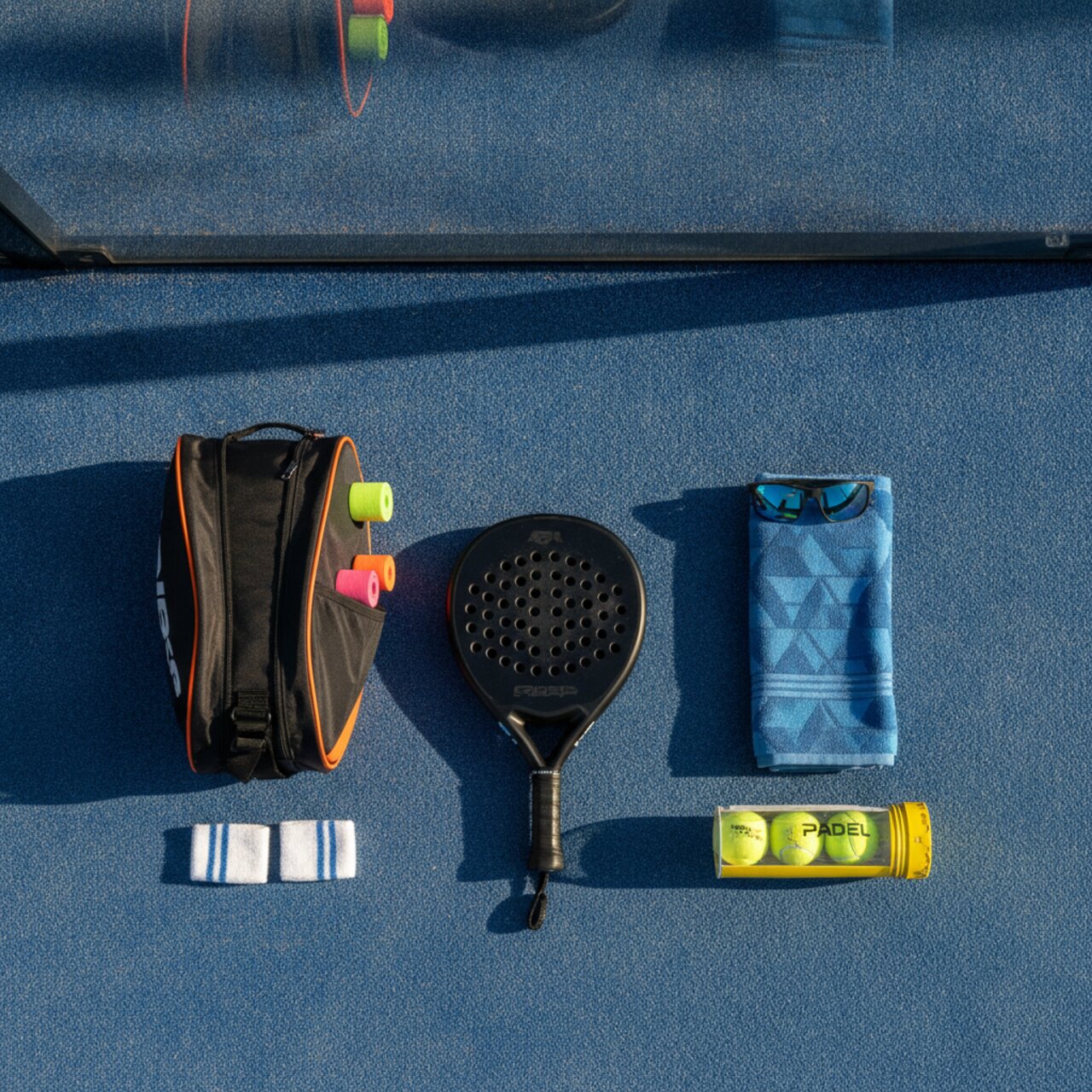
If you want a full rundown of what belongs in your bag alongside the racket, the padel equipment checklist covers covers, spare grips, and the rest.
Inspecting for Wear
Build a 30-second inspection into your routine, ideally when you clean the face. You’re looking for four things.
Run a finger around the bumper guard and frame edge. A guard worn down to the carbon underneath needs replacing before the next scrape hits the frame itself. Replacement bumpers are cheap and clip or glue on.
Check for hairline cracks, especially around the frame edges and the throat where the handle meets the head. Tap the face gently across different zones and listen. A healthy racket sounds consistent. A dull, rattling, or buzzing zone can mean the core has separated from the face, an internal delamination you can’t repair.
Look at the face surface. Visible cracking in the carbon or fiberglass, or a spot where the surface feels spongy compared to the rest, points to core damage in that area.
Feel the handle for any wobble or click when you twist it. A loose handle is a structural failure in progress and worth retiring the racket over, since it can fail mid-swing.
How Long Should a Padel Racket Last
With normal recreational play of two to three sessions a week and decent care, expect a quality racket to stay at its best for roughly 18 to 24 months. It won’t shatter at the two-year mark, but the core gradually loses rebound, so the racket feels softer and you lose power and control without quite knowing why.
Heavy players hitting four or more sessions a week, or competitive players who play hours daily, may notice decline in 8 to 12 months. Beginners hitting the frame and ground often can crack a racket far sooner regardless of the calendar.
Here’s a rough guide to how usage and care affect lifespan:
| Player type | Sessions/week | Expected peak lifespan |
|---|---|---|
| Casual, careful | 1-2 | 24-30 months |
| Regular recreational | 2-3 | 18-24 months |
| Frequent / club | 4-5 | 8-12 months |
| Competitive daily | 6+ | 4-8 months |
The number that matters more than the calendar is playing hours and how it feels. When a familiar racket starts feeling dead, when smashes lack their old punch, or when you’re consistently missing the sweet spot you used to find, the core has likely fatigued. At that point no amount of maintenance brings it back.
Maintenance FAQ
Can I wash my padel racket grip? Don’t soak it. Wipe the grip with a barely damp cloth and let it air-dry fully. If the overgrip is the problem, it’s cheaper to just replace it than to clean it.
Is it bad to leave my racket strung in the bag overnight? Rackets aren’t strung, but leaving a damp racket sealed in a closed cover overnight traps moisture against the core and handle. Let it air out first, then store it covered.
My racket has a small frame crack. Can it be repaired? Cosmetic surface scratches are fine to leave. A genuine structural crack through the frame or face cannot be reliably repaired and will spread. Retire it for hard play and consider it a spare.
Do thermal covers really matter? Yes, mainly for temperature buffering during transport. They won’t save a racket left in a 60°C car all day, but they meaningfully slow the heat and cold swings that fatigue the core.
Should I rotate between two rackets? If you play often, alternating two rackets gives each core recovery time and spreads the wear, roughly doubling how long each stays fresh. It’s the same logic as rotating running shoes.
Good maintenance won’t make a cheap racket play like a premium one, but it will keep whatever you bought performing the way it did on day one for as long as physically possible. Clean the face, respect the heat, replace the overgrip, and inspect the frame. Once you’ve protected the racket, point the same care at the rest of your kit with the best padel rackets guide for when it’s finally time to upgrade.